Monday, 1 April 2013

Mysore Musings


Despite having the been-there,done-that feeling, Mysore has a lot more to offer than what meets the eye. My friend Anusha Vincent (http://daftnoosh.blogspot.in/) and I, in our first trip together, find that Mysore is full of twists, turns and tales...

She flows like a dream,she carries dancing rainbows on her sprightly sprays,she gushes with gusto out of dams,she is also the cause of national dispute,death,and destruction the fiery Cauvery is a force to reckon with.And,when we headed out to Mysore,this is what we sought to experience.

An arduous car journey later, we find ourselves in the old culture-seeped town of Mysore which to this day,maintains its old-world charm and peaceful ambiance. First up, we make our way to The Metropole (situated at the centre of the town, it was used as a resting place for the Maharajas English friends. Interestingly, this is the only heritage property that has retained its English name), to refresh our tired selves and fuel our empty tummies.As we enter the heritage property, we are transported to an age gone by the colonial times. You can almost envision the Maharajas and the Brits lounging about in the elegant wrought iron couches and divans, sipping on their evening cup of tea. Lunch consists of a typically Mysorean buffet. 
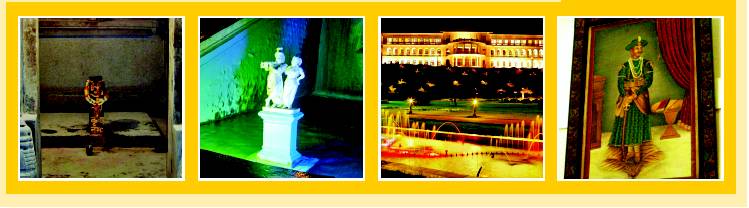


(File pic) Brindavan Gardens.... and the Tipu Sultan portrait

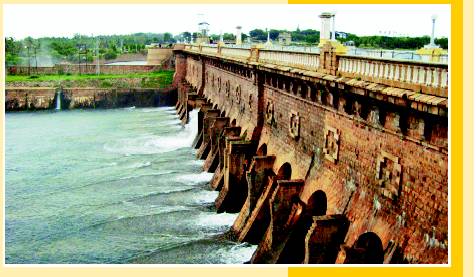
(File Pic) View from KRS dam


(File pic) What else! That famous palace....

The dining area has an enviable collection of hunting trophies, tiger included (the area manager, Awasthi, tells us he had to go through a tedious process of getting permission from the Animal Welfare Board to do so) and not to forget, a 100-year-old painting of Tipu Sultan,which was acquired from a local.
 

Post lunch, we continue our journey towards the Brindavan Gardens, where we are scheduled to stay at the Hotel Royal Orchid Brindavan Garden, another heritage property (built in 1910) this one, to accommodate British engineers who routinely flew down to build the mighty KRS dam. A whiles rest later, we head out to the Brindavan Garden,which happens to be right at the foot of the hotel. The dancing fountain, which was once a major attraction, has become some kind of a joke, with locals leering and visitors wondering what all the hoopla is about. The saving grace comes in the form of heavy downpour. Walking in the evening rain, surrounded by flora and ghostly fountains, can be a very cathartic experience. Follow this up with a long, warm bath and you're set for the night!

We start our next day pretty early. A drive on the stretch of the KRS dam (which required special permission from the authorities) gives us an idea of the fervour of Lady Cauvery. We find our way to a till-recently-submerged temple and dig around. What we find astonishes us. The temple, dedicated to Lord Venugopalaswamy, was found underwater 10 years ago, and local villagers decided to rescue and restore it. Work has been underway ever since. The original ceiling stones, pillars and idol have been retained, making the temple resonate with the feel of a bygone era. At the foot of the temple, gently flows the Cauvery, India's only ayurvedic river, fed by water from the Hemavathi, KRS and Gorur dams. The water, which originates at Madikeri, the centre for ayurveda spas and coffee plantations, is pristine and sweet to taste. Needless to say, the villagers take fierce pride in the property they claim to be theirs, just as their counterparts in Tamil Nadu! That's not all! This mighty river also holds under it another temple, this one,dedicated to Lord Shiva. However, it is only when the water level goes down by at least 35 feet that it can be rescued. Both the temples are believed to be around 250-years-old.

On our way back, we drive around the Kanambadi village. There are tales to be told and we are enamoured. Therein resides a certain Budappa, who's prone to dying. Every year! Ever since the KRS dam was built, Budappa started having bouts of death during the month of March, right after the Ugadi celebrations. 30,000 people gather to watch this ritual every year. The man dies (this has even been confirmed by doctors from the reputed Jayadeva Hospital), is mummified, carried in a procession around the village, which is dotted with a series of four-pillars. At one such place, that lies opposite the Iriammadevi temple, Budappa comes back to life! He then proceeds to the temple to do puja, while villagers affectionately look on. 

A quick breakfast later,we make the rounds of the usual suspects the Mysore Palace, Chamundi Hills, St Philomenas church, market circle, rail museum et al. We return surprisingly refreshed, rejuvenated and dreading our return to routine! Mysore continues to enthral, and we suspect will continue to, for ages to come.

Travel Trivia

Kushal Nagar: A Tibetan settlement in Coorg. A must visit! 

Mysore Palace was originally called the Amba Vilas Palace.
The Field Marshal Cariappa Circle is popularly know as the Metropole Circle 


* As appeared in Chennai Times
Copyright ©2012 Chennai Times, Times Of India

Wayanad - Gateway to getaways

When I decided that I wanted to be surrounded by history and heritage, I knew I had to visit Wayanad. Situated majestically on top of the Deccan plateau, Wayanad is characterised by dense forests and deep valleys, not to forget the intoxicating smell of spices. I had to fight my way through at least a dozen hairpin bends to reach Wayanad and when I did, I was at a loss of words. The breathtaking scenery and the mind-blowing weather had me stunned.

I first decided to visit Soochipara Falls. A number of rocks, covered with moss, led me to the foot of the falls, where I heard the gushing sound of water from a majestic height of 300 feet. I had to be careful while getting down to the pool as one wrong step could have left me with bruises for a souvenir. The Kuruva Island is probably one place which thoroughly exhausted me, but also left me wanting for more. Spread across a sprawling 950 acres, this island is a perfect retreat for those who want to have some time to themselves.

Script found in Edakkal Caves

View from our bus

The Soojipara waterfalls, though there's very little water falling in this hot summer!

A closer view of the waterfall

Enroute Edakkal Caves

Enroute Edakkal Caves

Part of the resort where I stayed...

Inscriptions in Edakkal Caves. These writings date back to 1000 BC, suggesting possible links to the Indus Valley Civilisation

One of the many hair-pin bends

Yet another carving found in the caves
For history buffs, the Edakkal caves is a must visit. A small cleft in the terrains of the plateau, Edakkal has some interesting carvings on the wall. I had the pleasure of visiting other interesting places in Wayanad — Chembra Peak, Muthanga Wild Life Sanctuary, Pookot Lake, Banasura Sagar Dam and the tomb of Pazhassi Raja.

But my trip wasn’t complete without a visit to the Fringe Ford. With towering trees and entangled vines, I got more than what I asked for— solitude, peace of mind and the impression that I was actually walking into the valley of God. And I knew I had made the correct choice — to spend a cosy week in this lovers’ paradise.


HOW TO GET THERE:
Wayanad is well connected to Tamil Nadu by road. However, it’s advisable to take the train. You wouldn’t want to miss the greenery en route. The nearest railway station and airport is Kozhikode. From Kozhikode, I hitched a bus ride till Wayanad.


ACCOMMODATION:
Thanks to the scenic cottages and resorts, my stay there was more than comfortable. The minimum cost for a cottage is Rs 2,000 and Rs 1,200 for a hotel room. Some of the best resorts are the Green Gates Hotel, Haritagiri Resort, Edakkal Hermitage and the Fringe Ford bungalow. 


TRAVEL TIPS

It’s a tough climb to the Edakkal caves and we do not recommend it for the weak-limbed or spatially challenged.

It’s the best place to buy spices and eucalyptus grandis.

Language might prove to be a problem, but it’s not too hard to understand Malayalam


* As appeared in Chennai Times in May 2009


Copyright ©2012 Chennai Times, Times Of India

Friday, 30 March 2012

A day in the life of an IGNOU student!

To,
Director
Chennai Regional Centre
IGNOU

Sub: Non acceptance of MTM assignments

Respected sir,

I’m currently pursuing MTM (first year) with IGNOU and have been assigned study centre 2501 (D G Vaishnav College) by the university. I submitted a DD for Rs 5600 (dated 9/08/2011, number 240870) at the IGNOU Chennai centre (Nandanam), requesting to be admitted to the MTM course. Soon after, I received a letter, stating I’ve been admitted to the course for the July 2011 session. When I met the officials at the Nandanam centre regarding course material, I was told I’d be intimated by my study centre through correspondence. I’d received no information from them until October. I then visited the centre again in November, December and January, to enquire about the books. I was told that I’d be notified by the centre. One lady was kind enough to tell me to check the website, and the website carried the same statement – you’ll be notified through correspondence by the study centre. (the website, for your information, doesn’t open now. It says – Account Suspended!).

It was not until March that I heard from the centre. After repeatedly trying to reach officials through phone (which conveniently no one picks up), I was told to collect the books from the Taramani office personally.

I’d even taken efforts to mail rcchennai@ignou.ac.in on March 12. The e-mail is as follows –
From: Lakshmi Venkateswaran lakshmi.24iyer@gmail.com
sender timeSent at 16:14 (GMT+05:30).
Current time there: 14:28.
✆ to: rcchennai@ignou.ac.in
date12 March 2012 16:14
subject: Urgent. No communication or study materials received mailed-bygmail.com 2 Mar

Hi sir/madam
Name: V Lakshmi
Enrolment No. : 115513492
Course: MTM

I had applied for MTM for the July 2011 session and I received a letter in August from the Chennai regional office, stating that I've been accepted for the same. I also received my ID card along with it. But till date, I haven't received any notification or communication regarding my exams. I haven't received my study materials as well. I've to take up my exam in June 2012 and I also have to submit my assignments by March so that I can get my hall ticket without paying late fees. A few days ago, I received the re-registration form for my second year. Kindly get back to me with the process to obtain the study materials and the date within which I've to submit my assignments.

Thanks
Lakshmi 9444909853

It’s another thing that the mail that I addressed to your official e-mail id hasn’t been answered until now. I went to Taramani to collect the books post March 12, and I was told that books for MTM 5 and 6 weren’t available at the time. A kind gentleman had the courtesy to SMS me a few days later, telling me he’s found alternative books for those courses, and I collected them the same day. Unsure I’d be able to finish the assignments by March 31, and given that IGNOU is student-friendly and flexible as you claim, I visited Guindy centre 15 days ago (you can verify the visitors’ book – I’d signed in at 5 pm sharp!) to enquire if I can submit only MTM 1 and 2, and TS 1, 2, 3 and 6.

But the person who apparently was to guide me through my assignments told me it would be wise on my part to submit all 12 papers by March. He said, and I quote – “You can write and take prints of all assignments because it won’t reflect well on your final certificates if the assignments were submitted late.” I also made it a point to tell one of your book’s in charge that a certain chapter in MTM 1 has been wrongly printed and I had sent a mail to the same e-mail id as per her request.

I’ve the MTM manual, and the instruction papers with me. And none of them mentions that the assignments have to ONLY BE HAND-WRITTEN. And none of your employees bothered to inform me during the numerous times I visited them that I can’t submit printed assignments.

And the chief at the study centre refused to accept my assignments that I had painstakingly sat and typed out on a computer, took print-outs of and hard-bound it. And the reason he gave me is that no one has submitted computer prints in the last 15 years!

I totally understand when he says I should have visited the study centre before writing the assignments. But why will I walk up till Arumbakkam, when the regional centre, which is supposed to man the entire curriculum, informs me that the books for 2011 course haven’t come yet and that the study centre will inform me?

Interestingly, all correspondence regarding fees and re0-reigisteration fro next year reached my home at the proper time. How come the correspondence from study centre failed to reach me?

The chief at the study centre said he will extend time for me to sit and write the assignments. But, why will I do it? When I am totally at no fault, having literally burnt the midnight oil typing out assignments and finding answers from fat books that I didn’t even have time to go through, thanks to the lack of communication from IGNOU’s end, and taken print outs of 200-odd pages and aligned them in position?

I’m a working woman, and which is why I’m doing my masters though long distance education. We are, for God’s sake, in the 21st century, and every single college in the country accepts assignments that have been printed out. Why, in Lord’s name, will the IGNOU not accept printed assignments? Especially when it hasn’t been mentioned in any of the handbooks that they won’t accept one! Especially when the assignment guide, who sits in IGNOU Chennai regional centre, tells me to ‘write and print’ the assignments!

It’s with great regret that I have to tell you that I’ve been traumatised by the incident. With due respect, I’m not going to write my assignments all over again because it’s a waste of my time, my energy, black cartridges and papers. Kindly accept the assignments as a special case, and at the same time, take efforts to state clearly to students in future that only hand-written assignments be accepted.

Thanking you,
V Lakshmi
Enrolment Number: 115513492
Study Centre: 2501

Wednesday, 14 March 2012

What, in heaven’s name, is a marriageable material?

A few days back, I was having a conversation with one of my cousins. She was complaining about how her life hasn’t been all that exciting in the last few months and how her past has come back to haunt her. She was hating her job, and the people she was required to work with. And to make matters worse, she was forced into decking up for a guy (who had come to ponnu paarthufy her) who I was sure she would have booted out of the house. But surprise! She said she doesn’t mind marrying him. I asked her if she loved him. She answered in the negative. I asked her if she liked him at least. No was her reply. I asked her why she, in God’s name, would agree to marry a guy who she doesn’t love or like. And she said, ‘My parents approve of him and he’s a marriageable material!’ And burst out laughing. Knowing her, she would decline the alliance soon. But, I’m just wondering, has marriage become an act of convenience? Is it just an institution that lacks warmth and emotion?

Monday, 12 March 2012

Down those quaint little roads…


One of the many things that I love about my life is the little trips (spanning for a minimum of 20 days) that I take with my parents to places that are historically, religiously, culturally, spiritually and geographically important. I’ve been to Rishikesh and Haridwar, to Delhi forts and Mysore palaces. In this series, I shall try and recall, and list down some of the things I enjoyed doing, some that I did because I had to, and some that I did without knowing why I had to!

On July 3, 2011, my parents, my perimma, my mom’s friend and I reached the Meenambakkam airport by 8 am to catch our Delhi flight. After we finished checking in, my mom, her friend and my perimma, who strictly believe that a person should eat his breakfast like he’s the king, opened their pottlam of pongal and vadai. I hurriedly moved away from them, lest they decide to offer me a piece of the vadai as well, and embarrass me in front of the rest of the crowd (Pongal in domestic airport!) ! After seeing off my attai, cousin and paati, who, by the way, were flying to Mumbai to attend my cousin’s engagement, we rushed to our terminal to board.

I guess all modes of public transport – bus, train and flight – come together to conspire against me. Whenever I decide to use their services, they will either a)arrive late b) not come at all c) arrive, pick me up and halt in the middle of nowhere owing to a puncture or lack of petrol or 1000 other technical faults or d) arrive, pick me up and reach the destination 200 hours late. In this case, it was the option ‘a’ ! We had to wait for about 2 hours before our blessed Kingfisher took off to Delhi.

I was stunned when I entered the Delhi domestic airport. It was huge, aesthetically-decorated and had instructions plastered on all four corners, guiding the lost travellers. AKA me. It was only after 45 minutes that we collected our baggage and made our way to get inside a taxi that we had pre-booked. We went and dumped our luggage at the koviloor mutt, where we were allotted a very nice and comfy AC bedroom. While both the aunts rested, my parents and I took the Delhi metro to reach IGNOU campus, where one of my dad’s cousins stays with his family. The rest of the day, or rather what was left of it, was spent chatting with them.

July 4
I admit I’m a shopaholic. Or maybe, a window shopaholic. Which explains why I didn’t mind roaming around in the hot sun on an otherwise lazy Monday afternoon in Janpath and Karol Bagh. Apart from a couple of leggings (which I anyway can get at a cheaper rate in Pondy Bazar), I didn’t buy much. Oh, that’s if you don’t count the clips and hangars and ropes that the grown-up women got, saying they were planning to use them during the rest of our journey to dry clothes!

July 5
My mother and her friend, Geetha, are what we call, enthu pattani. Bringing the laptop and mailing snippets to my TOI editor is one thing. But catching a bus, a train and an auto to reach KVS regional office to clarify a teeny weeny doubt in some auditing is just taking sincerity to the next level. While amma and G did their job, literally, my dad, my perimma (P) and I nicely slept through the day. We then went to the New Delhi station to catch the Amritsar Shatabdi and reached the Golden City of Punjab at 11 pm. I was overwhelmed to see so many Sardarjis. I’ve secretly always wanted to meet some of them and flaunt my Punjabi that I learnt watching Akshay Kumar, Shah Rukh Khan and Ajay Devgn in films. So, when our Sardar driver came up to us (the hotel in which we were scheduled to say in had been kind enough to send us a transport), I refused to let my dad speak. Right from –  tuhada ki haal hai (the driver was a young chap!) to tanva yahe vaad ji (though I could have just said shukriya or dhanyavad or thanksss!), I was literally gloating in Punjabi. Like Rajinikanth, I was talking, walking, breathing and eating the language!

 To be continued...

Sunday, 11 March 2012

Why this kalyana veri?


Agreed that I've been working for the last four years (almost). Agreed that I'm going to be 24. Agreed that I'm the only daughter to my parents. Agreed that they have this big kadamai to get me married to a nice, good-looking, kai neraya earning, well-mannered guy from a respectable, well-to-do family with no nacchu pidungals. But well, I don't want to tie the knot with this 'nice, good-looking, kai neraya earning, well-mannered guy from a respectable, well-to-do family with no nacchu pidungals' anytime soooooon!
I've been covering cinema for this very nice national newspaper, and almost everyone in my beat knows me. But, I want to become this supercool travel journalist, whose articles everyone will pick up and read and use as a guide when they want to travel. I also want to be this very super intelligent girl who goes on a 'i'm-going-to-uncover-the-secrets-behind-aandipatti's-lost-civilisation'! expedition.
So, what's the problem you ask. It's my marriage! I don't know if my husband, whoever it will be, will allow me to do all this. Not that I'll obey his orders lying down. But the point is, how can I freaking marry someone whom I don't know from Adam?!
And how can I expect him to give in to my whims and fancy?
So, all I did was ask my parents to let me be until I achieve my dreams (gloating now). So, they will have to just wait for about two more years, hopefully.
But no! amma appa will be amma appa. With whatever knowledge of computer and Internet they have (both are auditors and puli in kanakku. So, sparing calculator and excel sheet, I don't think they know much about computer potti!), they jump into the payyan paarthufying padalam.
With Tamilmatrimony, SSmatri and 200 other matrimony sites advertising their efficient search engines, my amma appa start their hunt.
Their criteria, apart from the abovementioned – no kousigam, 2-4 years elder than me, should belong to one of the 20 stars tat I'm compatible with , and look like one serial hero atleast. (PS in the middle of my post : While I flatly refused to let them put up my picture on the sites that they surf, I did allow them to write a smallish biography about my achievements online. I'm all heart, I know!)
Apart from the sites, my amma appa also started relying on their relatives, friends, pakkathu veetu maami, edhuthaathu mama, flower-selling aaya and newspaper podara paiyyan for information on eligible bachelors!
But hello, someone ask me if I have anyone particular in mind? And mom, you can’t ask this question (in a I-didn’t-bring-you-up-like-that-so-don’t-say-yes tone) while you are riding pillion with me on my 7-year-old scooty pep, while I sweat it out to balance you, your sotthu mootai (lunch bag), my sotthu moottai and my oversized LV imitation bag that I forced appa to pick up from roadside shop in T Nagar! Not especially when my ‘yes’ or a ‘no’ will barely be audible in that blood-curdling horn that kuppa vandi lets out.
Sigh. Sigh the sigh. Well, back to what I was trying to tell you all. Why are parents hell-bent on getting their daughters married to some X, Y or Z when they don’t want to? And why do they always try to convince them saying you should marry when the time is right or that your mama’s daughter’s son’s chitti’s mother’s aunt wants to see your kalyanam before they die? Will someone explain/enlighten me?

Tuesday, 25 November 2008

I cant lose anyone

Aham Brahmasmi… That’s how I see myself…

I thought I was happy. I thought my life was perfect. I thought I would have all the fun. I thought I would never lose anyone… until I lost all my belief. Yes… life stole away from me two lives..

I had joined my office in May and the very next day, my granddad fell ill. Not tat he was extremely fit. He was suffering from parkinson for 72 years! He communicated jaundice and right in front of my eyes… he went kaput. When I was barely five, he stealthily wrote my homework’s for me, picked me up from my school, told me… paal vandachu, coffee kudikalam… he was very possessive about me. He used to say.. “she’s my pethi. I won’t let anyone else touch her.” Tat was his standard dialogue. And I used to feel proud. He taught me slokams and narrated bed time stories. We had our own carom tournaments, with our own special rules. When amma appa got transferred to another city, taatha paati were my guardian. He signed my report cards, wrote leave letters when I didn’t feel like going to school and he even attended PTA meetings for me. Damn me.. I cant even figure a sentence when am talking about him and I call myself a journalist! He was very special. We had our own secrets. I told him how I used to have head bath every morning without telling amma appa or paati… tat was few days ago his death! And till date, it remains a secret…..

I couldn’t bring myself to face the reality. When his body was brought in an ice box, I kept staring at his legs and eyes.. praying silently tat he would signal to me tat he s still alive. But of course, that never happened.

And then, exactly after 6 months, I lost my attimber. To tell you the truth, I was scared of him. He had a thick moustache and I thought he was very strict. I used to hardly open my mouth when I was with him. But things changed this august. My mom literally had to pull me away from him… he was my sole companion. We kept going yak yak all the time. It was raining heavily then and I couldn’t go for this sight seeing thingy… He kept insisting that I must visit Bombay when it isn’t raining and tat he would take me out… and I went again this November… to take him to his abode. He left me stranded… and yes.. it didn’t rain this time in Bombay.

Tuesday, 30 September 2008

This is life!

After a long time, am telling you my life is perfect.. well sort of. I mean, am employed with the times group in chennai.. office is just 30 min drive(without traffic.. tat s d catch), my collgs r just great.. i mean.. how would ur boss(editor in my case) react if u walk into d meeting hall with pen in ur mouth, notepad under ur chin, mobile in one hand and coffee cup in d other? but m boss says... childishness in its extreme! he thinks he would have been sued for employing me.. coz i was just 19 some 3 months ago wen i joined. others feel d same! some say am a bundle of energy... others say am akid. but everyone agree tat am a jam baby!(i dont mind coz dravid is also a jammy) and tat am a chatterbox.. tat i agree with. i mean.. i cant keep my mouth shut.

hey halt... boss.. if u r reading this (like u said.. my blogs might be error free.. coz they r just my feeling.. no quotes and not YOU for a simple U... ) so.. please dont think my main stories will be like this... am jus writing for myself and not for d CT readers:).. happy reading!

ya.. abck to square one... , life isnt in deep pits anymore... and according to my frnds..and am better off than anyone else in our gang... and am not wondering if i should become a sanyasin..(u know i dont want to become one... well.. u-know-y:))..... and my life is colourful with an U.. guess wat.. i even started behaving like an adult... i dont cry for small things like not getting an ipod...:)
i even stopped gulping down packets of sugar...and i stil have my jap mala... i wear them secretly..(gosh.. it is not a secret anymore)... and i also have this secret fascination abt this.. ummm.. these 3 guys.. ok. make it 4... ya.. so am perfectly normal.. and am more like a girl who is 20-yr-old... with a perfect life...

and lets see... i still crave for coffee... and chocolate... and still coffee without sugar.. is still ahte morning rains... and afternoon sun...

and know wat.. i just realised tat ppl who look dignified are really dumb.. in the last 3 months.. i haven come across any single person who would like to have a conversation- my way! i mean... noone talks my kinda sense.. and.. ya. tat s it...

but trust me... am meeting all these nice ppl who have inspired me in some way or other.. bas.. i jus want to meet KK and SK..and i wil be happy....

goodness... why do i want sooooooooo many things in life? i think i forgot my aim- to attain moksha... ok. i wil.. but after 60 years..:)

meanwhile am waiting for tat special somone to come back.. i have lots of things planned... goodness... am loving my life.. its too perfect to be picture perfect...:)

Friday, 14 March 2008

Am Back... !!:(

hello all.. am back. trying to tell u al how i have fared in life.. basically am back to square one! i don know wat to do wit life.. or life doesn know wat to do wit me i guess.. cause its been pushing me from one ladder to another.. pillar to post(I SHALL KICK U IF U READ IT AS DOG) and still.. its a mystry. i think i would have fared well if i had remained in kailashnath and become a sanyasin.. i atleast wont be sitting here.. bothering abt my placement.
first NDTV calls me.. says come join Metronation. then calls me for a training session in Jan. My coll says.. i can give u permission only after 1pm... le.. y do i need their permission for tat?!?!. so the channel chucks me. then am al keen about joining BHU(after seeing aaja nachle:)).. then Times Now me i apply.. TOI me also i apply. and after al this.. am suddenly bored with everything. No studies.. no job... no housekeeping as wel.!
My dad threatens me tat i wil be kicked out afe=ter 29th if i don do anything useful.. my attai calls me to her place.. then..? life s simple rite? no.. TOI takes my application.. says i wil be called like.. within a week for interview. then i make huge plans... wil bcum their travel journalist.. go officially to my attai s place.. have fun.. come back and submit 5-6 reports! but now... am back again. totally bored.
Am writing my final sem exams and i have a feeling am not doing wat i want to. So what am i to do? take up whatever job comes or try to find out what i want to do with the rest of my life? (according to my horoscope, its some 60 years more!!!!!!) ya... i also don want to do travel management in BHU...
basically am not doing anything worthwhile except the fact tat am blogging now... trying to clarify my thoughts while am typing it.. and gosh... no use. its al d same way it was before.. so.. pleaseeeeeeee help!!!!!

Wednesday, 23 January 2008

Moksha- No Revival


Take this test!


There's no doubt about it: A quick-thinking person like you leaves no stone unturned and wastes no time solving any mystery that comes your way. Whether you're finding the fastest route to work, spotting online scams, or thinking up the perfect plan to escape a bad date, when it comes to using your noggin, you're definitely in first place.

Of course you aren't just book smart. You're also streetwise and savvy, especially when it comes to the things that are most important to you. With that deadly combo of creativity and logic, your brains are the only muscle you'll ever need when tackling even the biggest of problems. Just don't let all that talent go to your head!


Wednesday, 29 August 2007

We all Dream..... why?

We all dream. Every night - as we dim the light of perception - we enter the realm of the dream. In this dream state our imagination runs free with little or no interference from our conscious mind. In the morning, when we awaken and return to consciousness, we may bring with us a recollection of the wanderings of our imagination - we remember the dream. To dream is natural, it is a universal experience. As sleep research has shown even animal dreams. How we regard the dream, however, varies from culture to culture and from person to person.

Unfortunately most of us remain blissfully unaware of our dreams - we fail to remember them. Even if we do remember a dream it is typically dismissed as meaningless and unimportant. For those of us who do place an importance on dream it still remains a mystery. So what is a dream?

Originally the dream was held to be the voice of God. Most aboriginal cultures hold that the dream is sent by the Great Spirit and serves to offer advice and instruction.
This idea of the divinity of the dream can also to be found in ancient Egyptian and Greek society. The ancient Greeks constructed temples they called Asclepieions, where sick people were sent to be cured. It was believed that cures would be effected through divine grace by incubating dreams within the confines of the temple.

In the early part of this century, however, the dream was championed by two great psychologists, Sigmund Freud and Carl Jung. For Freud the dream revealed that which the dreamer would rather keep hidden. By exploring the dream one was forced to face that which was suppressed and rejected within oneself.

Jung had another theory. Jung felt that the dream acted as a mirror for the ego - revealing that which was missing within the consciousness of the dreamer. For Jung the dream acted as a teacher and guide on the road toward wholeness.

The psyche, or mind, is made up of two distinct fields- the conscious and the unconscious mind. The conscious mind is also referred to as the ego. The ego, or conscious mind, represents our awareness and capacity for thought and self-reflection, whilst the unconscious houses our instinctive wisdom and patterns of behavior.

Active within the unconscious is a creative force which seeks consciousness - the unconscious seeks to be made known. This drive toward consciousness is the force of individuation - the force by which we come to realise our greater potential…. What is generally known as Dream!

The way of the dream offers an alternative. For the dream belongs to the twilight zone of consciousness - where the ego and the unconscious meet.The conscious element of the dream lies in its remembrance, the unconscious element lies in its mystery and perplexity. Half conscious, half unconscious, the dream acts as a bridge between the known and the unknown. To listen to the dream is to listen to the unconscious. Through doing so one relieves the need for the unconscious to force itself upon you.

Dreaming is one of the most fascinating experiences of the mind. At the same time it is one of the most perplexing. So often we know that a dream is trying to tell us something but still its meaning eludes us. Its language appears strange yet familiar. If our unconscious mind is trying to tell us something why doesn't it just come right out and say it? Why the puzzle instead of the picture?

Dreams are riddles rather than proclamations. They ask us a question hoping that we search and find the answer to ourselves. Dreams aim to broaden our mind, to teach us what is beyond our comprehension. If a dream were to speak directly to our present state of consciousness then all would be easily understood … yet nothing would be discovered. A dream is by necessity… a mystery.

To interpret your dreams is to travel this splendidly majestic road. Dreams offer us a passage into the unconscious; they give us a place to start. And it is damn useful because we can not sit and think… ok... So what is it that am not aware of?!

So how does one answer the riddle which the dream is? First of all it is not the obvious. With any dream, you admit that you’re vexed up. This is what signals to you that you’re in the right state to begin. The dream teaches us most when the mind is empty and free of preconceptions. Each dream is unique and must be approached in its own way. Dictionaries of symbols, dream books and various psychological theories offer us very little when it comes to the actual dream.

Next list all the components of the dream, be they people, places or circumstances. The third lap is most important. Next to each of the dream components write down all your associations to the dream elements. After this you may also amplify the dream. The verbatorical interpretation of dream is just the size of your palm.

Dream interpretation was taken up as part of psychoanalysis at the end of the 19th century; the perceived, manifest content of a dream is analyzed to reveal its latent meaning to the psyche of the dreamer.

A person, supposedly my friend had a very weird dream. She found herself being chased by a dog and then she fell from a cliff. This dream repeated itself for over a month. When after a month, she couldn’t handle the situation, she went to this psychologist. After reviewing her activities in the recent days, he came to a conclusion. Due to official problems she was facing from her manager, she was losing control and had tried to break away from the trauma by attempting suicide. After thorough counseling, she stopped getting such dreams.

The above condition was not a whole lot complex. Dr. Bharathi, Dream counselor with a private hospital narrates a case file where her patient was the key spectator of an act of unintended crime committed in her deep slumber. The patient was constantly dreaming about a dark alley where she sits and draws a sketch of a boy over and over again.She was suffering from part memory loss. After going through treatment for a period of about six months, she was able to get over with it. It so happened that during her visit to Shimla, with her gang of friends, in a skiing accident, her boyfriend accidentally fell down the mountain slope and in the process cut himself in a silver lining that was hung for electrical purpose. After she regained her consciousness, she had been in a state of shock and underwent treatment for another two months.

To quote a personal experience, I always had this feeling that I speak to an old lady in the dark in a room painted of stumps with red paint. She constantly babbles about a door which has to be opened using a silver key. Till date, I couldn’t figure out what it means. I have gone through my entire family lineage… hoping to find the lady’s portrait… just in case she was giving me a clue about a hidden treasure!!!

Well, you know when you have interpreted a dream correctly when you get an 'Aha!' reaction. Just like a riddle, all of a sudden you 'get it' and everything makes sense.
If you penetrate only part of the issue which the dream presents or slip up in your interpretation, then the unconscious will send a follow up dream. If you fail to interpret the dream entirely then it will often come again. This is the phenomenon of repetitive dreaming; since you didn't really listen the first time, the unconscious sends out the same message again… unless you find out what the heck it means!

One last but a very important point. Dreams aim to rebalance a partial or lopsided attitude. They serve to teach you a lesson. Externalize the internal by applying the dream to your everyday life. It is only in this way that you truly honor your dream.

Monday, 13 August 2007

Coffee to Cappuccino...


There are many ways to jumpstart a day. You can go and stand under a cold shower, have someone yell at you as if they were asking someone to send breakfast from a country which is millions of miles away….or you can walk like a zombie, doing your work with half baked concentration… mistaking your shaving cream for a tooth paste… or you could drink a cup of strong coffee.

However, these days coffee is not simply something that clears the mental cobwebs and gives people a bright eye and the courage to face another day. Coffee has become more than an emergency standby. It is now the beverage to be consumed many times in the course of a day.

Coffee when you wake up, coffee when you arrive to work, coffee during the first break, and another cup with lunch. And on and on it goes. Coffee all the time!!! Sometimes, it is justified too. If you have attended meetings, you know what it means. If you are in the speaker's position you need to be alert and not start yawning halfway through the presentation, coffee helps. If you are the audience and you sit there wishing you were a hundred miles away, fishing perhaps, and then coffee can provide that facade of alertness that makes everyone think you are really paying attention. In short, no matter what the occasion or need is, coffee has become a good old standby.

Over the last decade, you may have noticed something a little bit different. Your favorite coffee shop is now referring to itself as a café and the person serving you coffee is now referred to as a barista. Also, your simple order of a medium double has now become far more complicated. Between learning some basic Italian to order a drink that was once known as large, medium, or small, and between having to pick through a number of different coffee drinks with funny names, it can be a bit tough buying coffee.

Drinks like the cappuccino have become all the rage among coffee lovers and for good reason – the cappuccino is a sweet drink. Originating from Italy, the cappuccino has a sweet, smooth taste that is irresistible. A European staple, the cappuccino has burned itself into the Indian consciousness in the late 1990s due to its availability in specialty coffee bar chains like Barista or Café Coffee Day. Now, even McDonald’s is serving this delicious confection.


The trendy ‘Coffee-world’ has probably been a real long evolution process but something which didn’t take that long to be recognized. Do you remember a time when coffee was served black with sugar on the side, no cream, flavors or any other such fancy alterations? Coffee was meant to give you with a good dose of energy and nothing else. Those small cups are still used to serve black coffee which is called espresso. Over the years a desire to enjoy the magic drink of coffee evolved into a desire for more than just the small espresso cup. People began to use larger cups and mugs to desire the quantity they desired.


Well… that was not the only thing that changed. In order to add color to that magic cup of coffee in our lives people started experimenting with different ingredients. This was the beginning of a whole new specialty coffee… a trendsetter.


Cappuccino, cafe latte, mochas, macchiato and all other coffee drinks that are different than the original black coffee are specialty coffee types. There are many different types of coffee creations like cinnamon, chocolate, hazelnut, caramel and vanilla flavored coffee… all this only to name a few. Only your imagination limits what you can invent as your own specialty coffee. You can put in anything you desire your coffee to taste like.


Does the experience of specialty coffee diminish over time? Not at all and if anything, it enhances the coffee experience by adding the extra spice or flavor for your enjoyment. Many people simply cannot have coffee just by itself. They find it too strong and overpowering thus, a bit of flavor helps them to enjoy a cup of coffee as well.


Regardless of how you take your coffee, black or with cream, flavored or plain, a cappuccino or a cafe latte, you have to admit that this wonderful drink has only improved our lives with its rich aromas and taste… morning, evening and night, whenever you desire. You do not have to have a day without coffee.

Eating the Indian Way….

India is not only famous of its multi-cultural and lingual phenomena but also for its mouth-watering multi-cuisines which are always a treat to the taste bud of every living human! The cuisines vary indifferently throughout the demography… reflecting the ethnic diversity… some of them playing with the sour buds, while some elusively pamper that part of your tongue which savors the sweet relics. Some have a totally indistinguishable taste… what we call as Khatta-meetha spicy punch!

Food is integral to any culture and, as a land that has experienced extensive immigration and intermingling through many millennia, the Indian subcontinent has benefited from numerous food influences. The diverse climate in the region, ranging from deep tropical to alpine, has also helped considerably broaden the set of ingredients readily available to the many schools of cookery in India. In many cases, food has become an indication of religious and social identity, with varying taboos and preferences which has also driven these groups to innovate extensively with the food sources that are deemed acceptable.
One strong influence over Indian foods is the longstanding vegetarianism within sections of India's Hindu and Jain communities. At 31%, slightly less than a third of Indians are vegetarians.

The most outstanding feature of the Indian way of food is that it uses almost everything it can find to garnish the plate and make it tasty. The staples of Indian cuisine are rice, atta and a variety of pulses, the most important of which are chana (Bengal gram), toor (yellow gram), urad (black gram) and mung (green gram).

Most Indian curries (gravy) are fried in vegetable oil. In North and West India, groundnut oil is traditionally been most popular for frying, while in Eastern India, Mustard oil is more commonly used. In South India, coconut oil is common. Hydrogenated vegetable oil, known as Vanaspati ghee, is also a popular cooking medium that replaces Desi ghee.

The most frequently used spices in Indian cuisine are chilli pepper, black mustard seed, cumin, turmeric, asafoetida, ginger, and garlic. Popular spice mixes are garam masala which is usually a powder of five or more dried spices, commonly comprised of cardamom, cinnamon and clove; and Goda Masala, a popular spice mix in Maharashtra. Some leaves are commonly used like tejpat (malabathrum), bay leaf, coriander leaf, fenugreek leaf and mint leaf for usually garnishing. The common use of curry leaves is typical of South Indian cuisine. In sweet dishes, cardamom, cinnamon, nutmeg, saffron, and rose petal essence are used to bring the typical flavor.

North Indian cuisine is distinguished by the proportionally high use of dairy products; milk, paneer, ghee and yoghurt are all common ingredients. Gravies are typically dairy-based. Other common ingredients include chilies, saffron, and nuts.

North Indian cooking features the use of the tawa (griddle) for baking flat breads like roti and paratha, and tandoor for baking breads such as naan, kulcha and khakhra. Puri and bahtoora, which are deep fried in oil, are also common. Goat and lamb meats are favored ingredients of many northern Indian recipes.The samosa is a popular North Indian snack, and now commonly found in other parts of India, Central Asia and the Middle East.

The staple food of most of North India is a variety of lentils, vegetables, and roti. Popular dishes include gujiya, chaat, daal ki kachauri, jalebi, imarti, several types of pickles, murabba, sharbat, pana and aam papad. Popular sweets include gulab jamun, peda, rewdi, gajak, milk cake, bal mithai, kulfi, falooda, khaja, ras malai, and several varieties of laddu, barfi and halwa.

Some common North Indian foods such as the various kebabs and most of the meat dishes originated with Muslims advent into the country. Pakistan was part of North India prior to the partition of India. As a result, Pakistani cuisine is very similar to northern Indian cuisine.

East Indian cuisines make use of thickening agents such as cashew or poppy seed paste. Milk-based sweets are also very popular fare, being a particular specialty in Bengal and Orissa. Bangladeshi cuisine is very similar to East Indian cuisine. Fish and seafood are very popular in the coastal states of Orissa and West Bengal. Many of the sweet dishes now popular in Northern India initially originated in the Bengal region.

The South Indian staple breakfast item of Idly, Sambhar and Vada served on a banana leaf is a very famous delicacy. South Indian cuisine is distinguished by a greater emphasis on rice as the staple grain, the liberal use of coconut and particularly coconut oil and curry leaves, and the ubiquity of sambar and rasam.

South Indian cooking is more vegetarian-friendly. The dosa, idli, vada, bonda, and bajji are typical South Indian snacks. Andhra, Chettinad, Hyderabadi cuisine, Mangalorean, and Kerala cuisines each have distinct tastes and methods of cooking. In fact each of the South Indian states has a different way of preparing sambar; a connoisseur of South Indian food will very easily tell the difference between sambar from Kerala and sambar from Tamilnadu and 'pappu pulusu' in Andhra cuisine.

Saraswat cuisine forms an important part of coastal Konkani Indian cuisine. Poha is an important food item made from rice that originates in Western India.

Indian Cuisine in the West Britain has a particularly strong tradition of Indian cuisine that originates from the British Raj. At this time there were a few Indian restaurants in the richer parts of London that catered to British officers returning from their duties in India.
In the start of the 20th century there was a second phase in the development of Anglo-Indian cuisine, as families from countries such as Bangladesh migrated to London to look for work. Some of the earliest such restaurants were opened in Brick Lane in the East End of London, a place that is still famous for this type of cuisine.

In the late twentieth century Birmingham was the centre of growth of Balti houses, serving a newly developed style of cooking in a large, wok-like, pan, with a name sometimes attributed to the territory of Baltistan,. Indian food is now integral to the British diet. Chicken tikka massala is thought to be Britain's most popular dish.

Due to the large Indian community in South Africa, the cuisine of South Africa includes several Indian-origin dishes; some have evolved to become unique to South Africa, such as the bunny chow.

Beverages have become an integral part of the cuisines. Tea is a staple beverage throughout India; the finest varieties are grown in Darjeeling and Assam. It is generally prepared as masala chai, tea with a mixture of spices boiled in milk. The less popular coffee is largely served in South India. One of the finest varieties of Coffea arabica is grown around Mysore, Karnataka, and is marketed under the trade name "Mysore Nuggets". nimbu pani (lemonade), lassi, badam dood (milk with nuts and cardamom) & Chaach (made from curd/yogurt ) , sharbat and coconut water also have their a special place in the itenary. India also has many indigenous alcoholic beverages, including palm wine, fenny, bhang and Indian beer. Having Paan after you savor the dishes is a customary.

With every part of the lip smacking fare up to the mark and with completely filled stomach… it’s the Indian cuisine one has to turn to… to feel the elation of the taste bud and the contended heart.


Thursday, 19 July 2007

I think i have overcome... i don know!!!!!!!1


People… I have this really huge doubt…why do I have to blog? [I heard that one can earn bucks by letting ads in one’s blogpage.. that s a different reason thoughJ]… ok… long time back I gave out a few reasons as to why I named my page as moksha-no revival… and seriously speaking… am still not sure I attained salvation… and well.. I have reasons to say so…

First... Am in my final year of graduation. And as of now... I have registered myself for campus placement. And am not even sure if I want to go for it. I mean... I want to work for a travel channel... do travel journalism... uncover solitary places that offer solace to heart, uncover super mysterious occurrences in some remote mahal in Rajasthan.. I mean.. This is life and it synomes with FUN. Right? But do u know the companies that are coming….? Hindu, New Indian Express, Vijay TV, Sun TV, Google, Infosys and the likes… this doesn’t sound like fun to me yaar…!

Second… I went to Madras University to find out about the diploma they are offering in Travel and Tourism management industry... And they asked me to come back after my final year results come!!!!!! This is something which I detest. How on earth am I going to make my resume look good???????.. And well... Am going to crack CAT this year… what a DRAB!!!

Third… I became the coordinator of placement cell voluntarily... Basically I wanted to know about every institute that comes over. And then I wanted to score an extra brownie. Also, help my friends identify the best company for them…

Holy Cow… Am supposed to attain salvation. But here I am… trying to get into all the “Worldly Pleasure” and then…what am I doing? Why does my mind always end up jumping from one branch to another [read MONKEY]…. And…Gosh!!!! I will never tirindify…

Ok! I was supposed to tell you al how I could never figure out why I wanted to blog… anyways... I hope I figure it out soon….

Wednesday, 18 July 2007

I shall overcome.....

i don have a clue why am blogging... actually.. i might know... but my aims and motives are not clear... but i can promise that i wil find out the reasons... vary soon!!!!!

meanwhile.. thanks to al u guys out there who are putting up with my TANTRUMS and.. well... :)

Tuesday, 22 May 2007

love or lowe?

Well. This is not the first time am experiencing this;…. When during my 9th std holidays.. I had gone to Mysore palace… I had this strange feeling that I had been there already.. as in.. I knew every turn in that palace.. and I was so familiar with it tat.. I could even recognize the faces in the painting whom I haven even remembered studying in my history text books… I know… I have psychic powers… I can foresee certain stuffs in my dream… and well.. I can at least tell u what I had seen. And that some one has a problem.. and it actually happens… now.. I wonder if I started remembering my previous birth….

Ok,… but what I wanted to tell u al now.. is something entirely different.. Am actually in love. Love as in… love. Not Lowe. But the problem is tat he is not alive. He wasn’t alive when I was born. Its Ravi varma….. The famous artist. I happened to go to Trichy and Tanjore.. in the Tanjore palace… there is a separate place for displaying various artifacts of the veterans and the royalist…. I have given a detailed description of those in my previous blogs… but now, strange it might sound, I noticed a painting.. That of a woman, sitting on the banks of a river… not river exactly.. A lake... ya. U might it call it a lake. With her hair open… and looking into the open sky... with bright full moon shining… and what does she do.. What is she awaiting..? It s al a mystery… and it was an artwork of Ravi varma… that s not the end… or beginning of my love…

Few days later, here in Nanganallur, there was an exhibition.. Creations from Kashmir were in display. I went there with my mom… actually I noticed the exhibition when I went to the 32 ft hanuman temple.. Co-incidence… and let me tell you, it plays quite a havoc in your life.. I went around…Buying earrings and neck pieces… and al of a sudden.. what do I notice? The same painting.. of the same Ravi varma… a malayali… his paintings displayed in a kashmiri exhibition… tat was quite astounding…
co-incidence.!!!

I have heard about love at first sight. Some friends of mine are no exception.. they have fallen head over heels for a person… that too just after a small glimpse. I used to tease them, pull their legs… there is a saying in Tamil…you can feel the pain of headache and fever only when it comes and attacks you…[not perfect translation though]. I felt the pang of that stupid pain when I saw that painting again here. It was terrible.. of all the things, why should that painting be displayed in al dimensions? In all possible combinations? That s what is called co incidence… I just fell in love with that painting. Anyways I went home…

Just the following week, my best friend, srikanth was celebrating his birthday. And what else could make a pleasant gift than that painting? Thankfully he has taste in arts and stuffs. So the very next day, I sneaked to that place and bought that painting… but the yarn doesn’t end there. My curiosity was kindled and I went online.. Started checking out facts about him.. His paintings and his expressions in them.. so serene.. so mysterious… Da Vinci’s Mona Lisa doesn’t stand a chance next to varma s art… and I slowly started liking his strokes.. so smooth, creating a transfix.. and that s how I fell in love with him… maybe I can call it affection.. Or more wisely put.. a patron of his… but emotionally.. I feel it s just plain love.

Thursday, 12 April 2007

Periya Koil.....


The following article has it s source from the book Tanjai periya Koil published by the state archaeology centre


Periya Koil!!!


Rajaraja Cholan, the Great Chola king built The Bragatheeswarar (Peruvudaiyar) Temple, also known as Big Temple. "In the twenty-fifth year of Rajaraja Cholan (A.D 1009-10) on the 257th day of the year the king handed over the copper pot for the finial at the top of the Vimana". It weighed about 235 lbs., and was overlaid with gold plate of weight of 292.5 Kalanju or nearly 35 lbs.

Layout

Rajarajeswaram, as the temple was named by its founder, fills a large portion of the small fort (Sivaganga Fort), encircled by moat on the east and west, the Grand Anaicut Channel (Putharu) on the south and by the Sivaganga Garden on the north. The temple entrance has an imposing gateway on the east, on either sides of which stand two small shrines dedicated to Ganapathi and Murugan and further through there is another Gopuram 90 feet high. This way leads into an outer court.

A second and magnificent Gopuram further leads into the main court in which the temple is built. The inner court is about 500 feet long and 250 feet broad, is well paved with brick and stone. The court is surrounded on all sides by a cloister. The western and northern wings have Siva lingams consecrated therein and there are paintings over these walls depicting sixty-four Nayanmars, sacred sport of Siva. The outer measurement of the temple is 793 feet by 397 feet.

Main Shrine

The main shrine of Sri Brihadisvara, the Great God - a Sanskrit rendering of the original tamil name Peruvudaiyar- stands at the western end of the main court. It comprises of five divisions -

1. Garbhagriha or the Sanctum Sactorum and the corridor around it
2. Ardhana-Mandapam
3. Maha-Mandapam with the open aisles
4. Stapana-Mandapam with the shrine of Sri Thyagarajar
5. Narthana-Mandapam for the temple paraphernalia and where the servant wait; and
6. Vadya-Mandapam and portico for the musicians.

Main shrine has three portals named Keralantakan, Rasarasan and Thiru-Anukkan. These portals are guarded by Dwarapalikas or the guardians of the gate. They are of huge proportions and of exquisite workmanship. There are several sets like these in the temple, of which seven of them are 18 feet by 8 feet. They are all monolith, and some are of very high artistic merit, especially at the entrance of Sri Subramanya temple.

The Sivalinga of Sri Brihadisvara is probably the grandest in existence. This image was originally called Adavallan (the one who is good in Dance). Another name was Dakshina-Meru Vitanken. Both the names occur in Thiruvisaipa as the names of the deity are as same as in Chidambaram Temple. This possibly indicates that the Saiva creed derived its support at the time mainly from Chidambaram. Rajaraja Cholan calls the image Rajarajeswaramudaiyar - The Lord of Rajarajeswaram. The tower over the shrine is named Dakshina-Meru after the abode of Lord Shiva at Kailasam, the Uttara-Meru.

Sri Thyagaraja, also called Vitankar, worshiped within a portion of Stapana-Manadapam, is the patron deity of Cholas. The legend goes that their mythical progenitor Chola Muchukuntan helped Indra against the asuras, for which help, he was presented with seven images of Thyagaraja, which he installed in the seven holy places of Thiruvarur, Thiru-nagai-karonam, Thiru-kkareyil, Thirukolili, Thirumaraikadu, Thirunallaru and Thiruvamur which are known as Sapta-Vitanka-Kshetras. Rajaraja Cholan was a devout worshiper of Sri Thyagaraja at Thiruvarur where he built this great temple; and, consecrated Sri Thyagaraja at Thanjavur also, as a mark of his own piety and in commemoration of the exploits of his celebrated ancestor.

The great Vimana is of the Dravidian style of architecture. It rises to a height of about 216 feet, a tower of fourteen storeys, finely decorated with pilasters, niches and images of gods of the Hindu pantheon. The basement of the structure which supports the tower is 96 feet square. The sikhara or cupolic dome is octagonal in shape and crowns the Vimana.

The gilded Kalasa or finial, over dome is 12.5 feet high. It is believed that the sikhara and the stupi does not throw on the ground. The dome rests on a single block of granite, of 25.5 feet square. Two Nandis, each measuring 6.5 feet by 5.5 feet beautify each corner of the stone which is estimated to weigh about 80 tons, and is believed to have been conveyed to the top of the tower by means of a inclined plane commencing from Sarapallam (scaffold-hollow), four miles north-east of the city.

Sub Shrines

Shrine of Sri Subramanya in the northwest corner, Shrine of Goddess Sri Brihannayagi, Sri Chandeeswara Shrine, Shrine of Ganapathy, Shrine of Nataraja in the north eastern corner, the colossal monolith figure on Nandhi, the sacred bull, in the central courtyard and the Shrine of Karuvurar.

The Great Nandhi

The Nandi within is elaborately worked and the Nayak Mandapam is massive and striking. The Nandhi is 12 feet high, 19.5 feet long and 18.25 feet wide. The Nandhi is a monolith weighing about 25 tons and the stone is said to have come from a bed of Gneiss at the foot of Pachaimalai near Perambalur. Another version is that the stone was brought over from the bed of the River Narmada in the north. There is a tradition that the Nandhi is growing in size with the progress of time. It was feared it might become too large for the Mandapam erected over it and a nail was driven into the back of it, and since, its size has remained stationery. Two portrait statuesques on the front pillars of the Nandhi Mandapam are pointed out as those of Sevappanayakan (the first Nayak ruler) and of his son Achyutappa Nayak.

The Frescos

The Chola frescos painting discovered in 1931 by Mr.S.K.Govindasamy of Annamalai University within the circumambulatory corridor Aradhana Mandapam are of great interest. These are the first Chola specimen's discovered. The passage of the corridor is dark and the enthusiast finds the walls on either side covered with two layers of paintings from floor to ceiling. Those of the upper layer are of the Nayak period, as certain labels in Telugu characters mentioned the names of Sevappa, Achyutappa and others. The Chola frescos lie underneath. An ardent spirit of saivism is expressed in the Chola frescos. They probably synchronised with the completion of the temple by Rajaraja Cholan. Saivism was at its height at that time and the Cholas were predominently of that faith.

Tanjore travel..:)


Tanjore Palace

The Palace, on the east main street is a series of large and rambling buildings of fine masonry, built partly by the Nayakkars around 1550 AD and partly by the Marathas. The entrance is by way of a large quadrangular courtyard. The encircling walls are pierced by big gateways to the north and east. The courtyard leads to a many-pillared hall. A small inner courtyard gives access to a large one.

On the southern side of the third quadrangle is a vimana like building, 190 feet high with eight storey and it is the Goodagopuram. This was the palace watchtower and the armory of the Thanjavur Kings till 1855 A.D.

The two Durbar Halls of the Nayakkars and the Marathas and the Raja Sarafoji Saraswathi Mahal Library are the chief sights of the Palace. The Saraswathi Mahal Library has remarkable collection of about 30,433 sanskrit and other vernacular palm leaf manuscripts and 6,426 printed volumes, besides a large number of journals. The library is the effort of the three hundred years of collections by the Nayak and Mahratta kings.

Madamaligai is the tower, which rises from the palace roof beyond the Goodagopuram. It has six storeys. It is believed that this was built by Nayakkar ruler to enable him worship Sri Ranganatha of Srirangam every mid-day. This many storied tower was destroyed by lightning and was subsequently repaired and preserved.

The Sangita Mahal or the Music Hall is a miniature of the surviving court of Thirumalai Nayakkar.

Tanjore Museum
A remarkable collection of South Indian sculptures and paintings is housed in the old palace buildings at Thanjavur (Tanjore)...

Within the museum there is a gallery with a representative collection of stone sculpture from the Pallava, Chola, Pandya and Nayaka periods. Another gallery contains samples of the characteristic glass paintings of Tanjore. There are two principal traditions in this style of painting in South India, especially in Thanjavur. Every Hindu home is supposed to have a prayer room, where the family deity is installed after the house is built. These household images of gods and goddesses are in bronze, silver or clay painted pictures.
The paintings are done on wood, using a variety of colours, and to enhance the pictures, details of jewellery and clothing are added by attaching gold leaf, paper, semi-precious and precious gems.

This museum is however best known for its bronze sculpture collection, of rare artistic quality. The Kalyanasundaramurti ( Tiruvengadu district, early Chola), the images of Shiva and Parvati at the time of their marriage, is truly a masterpiece, one of India's finest bronzes of all time.

Saraswati Mahal Libraray
This library has one of the most important oriental manuscript collections, in India. Established around 1700 AD, the library contains a collection of over 44,000 palm leaf, and paper manuscripts in Indian and European languages. Over eighty percent of its manuscripts are in sanskrit, many on palm leaves and are very unique. The Tamil work includes treatises on medicine, and commentaries on works from the Sangam period, all lipis, pictorial depiction of Ramayana and Mahabharata, miniature books and lineage of the sarafoji kings.

Wednesday, 11 April 2007

My first trip....


Tittai


When the world was submerged under water during the pralayam... this place remained aloof and vashishtar prayed here during this time.. hence.. Tittai!

There are two famous temple here...vashishteshwarar and Navaneethakrishnan-panchamukha aanjaneyar temple.

Vashishteshwarar Temple

This Shivastalam is also known as Therur or Ratha puram. The name Thittai comes from the temple's location on sand dunes between the Vennar and Vettar rivers. Tenkudittittai is also known as Vilvaranyam, Vasishtasramam, Dhenupuri. It is located at a distance of about 3 km from Thanjavur. Ten Kudi Tittai is considered the 15th in the series of Tevara Stalams in the Chola kingdom located south of the river Kaveri.

This east-facing temple enshrines Shiva in the form of a Shivalingam with horizontal markings. The temple is designed such that a drop of water falls on the Shivalingam once 25 few seconds. There are two stones... suryakanthakal and chandrakanthakal stiffened over the vimana.. these two stones capture moist from air and gives it back in the form of water droplets directly over the lingam, every 25 minutes. This is the nithyabhishekam.

Images of Nartana Ganapati, Dakshinamurthy, Lingodbhava, Bhrahma and Durga adorn the niches. Ulaganayaki's shrine faces the south. Across from the Ambal shrine is a mandapam with carvings of the 12 zodiac signs. There is a separate shrine dedicated to Jupiter. There are also shrines to Surya, Ganesha, Kali, Balasubramanya, Nataraja and Gajalakshmi.

The Vedas, Renukadevi, Vasishtar, Gowtama, Adi Seshan, Kamadhenu and Vishnu are said to have worshipped here. Legend also has it that this shrine surfaced on a mound between the rivers Vennaar and Vettaar. The name Therur or Rathapuram arises from the legend of the chariot of a king by name Sumali being stuck in the dunes here. Legend also has it that the dunes here emerged at the end of the deluge and that Shiva appeared here in the form of a Swayambhu Lingam.

Six worship services are carried out each day. The annual festival at Tenkuditittai is celebrated in the month of Aries. The annual Bhrammotsavam at Tiruvittakkudi is celebrated in the month of Vaikasi (Taurus), where the chariot procession happens on the 9th day, and the glass palanquin Saptastana festival occurs on the 12th day. The Saptastanams here are Tenkudittittai, Vennaaru, Tanjaipureeswarar, Gudalur, Kadapadappai, Punnainallur and Poomalai Naaganathar.

Another striking character of the temple is displayed on 25,26 and 27th of panguni month(april) when sun’s rays directly fall on the lingam during the sunrise and the rest of the temple is in dark...[I got to see it].. and this place is also famous as a guru Thalam.

Navaneethakrishnan-panchamukha aanjaneyar Temple

The panchamukha aanjaneyar is very powerful. If one has any grievances, he can simply write it in a paper, tie it around a full coconut and do an archanai for the god.. and within prescribed time, the complaint is done with. The pujari has a special power of talking with the god.. he is a hanuman upasakar...